Six mile markers, start to finish.
A paving project goes from a free site walk to the last painted line in six steps. Here is exactly what happens, in order, and what you need to do before and after.
Follow the road.
Mile marker 1 of 6
- 01
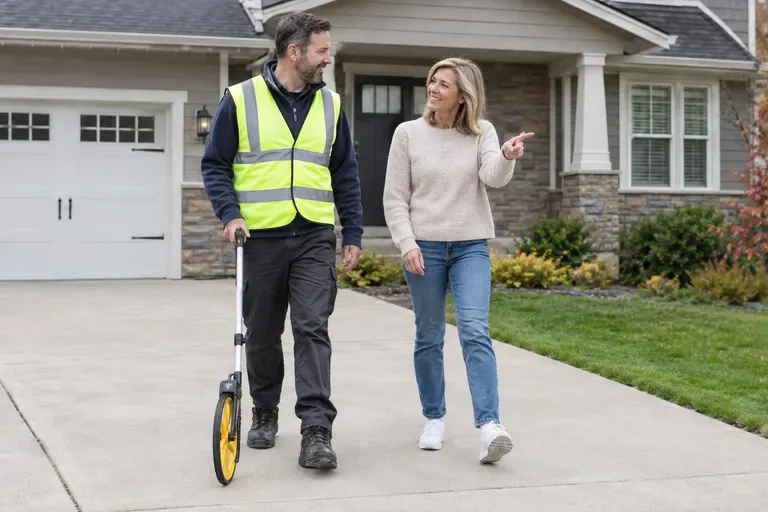
Free site walk and estimate
We walk the property, measure, probe the existing pavement, look at drainage and talk through repair, resurfacing or replacement. You get an itemized written estimate.
Measured on site - 02
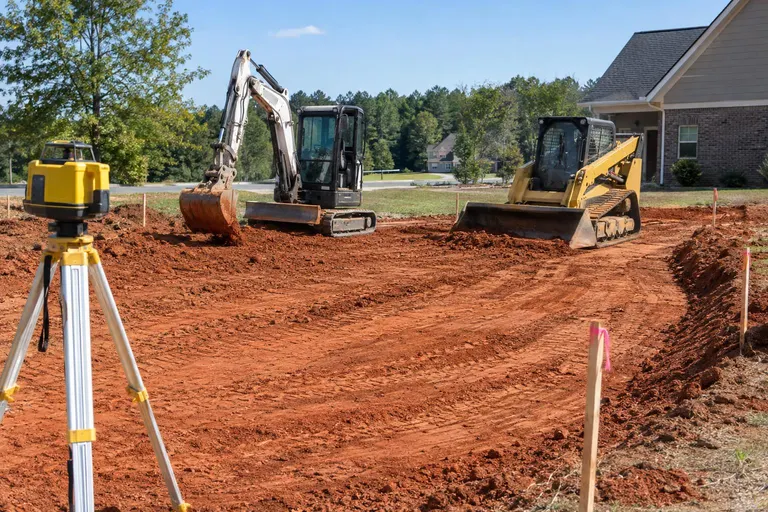
Grade and drainage plan
Grades are set so water leaves the surface, soft soil is removed and the subgrade is proof-rolled. Culverts and drains are planned before anything is laid.
Water planned first - 03
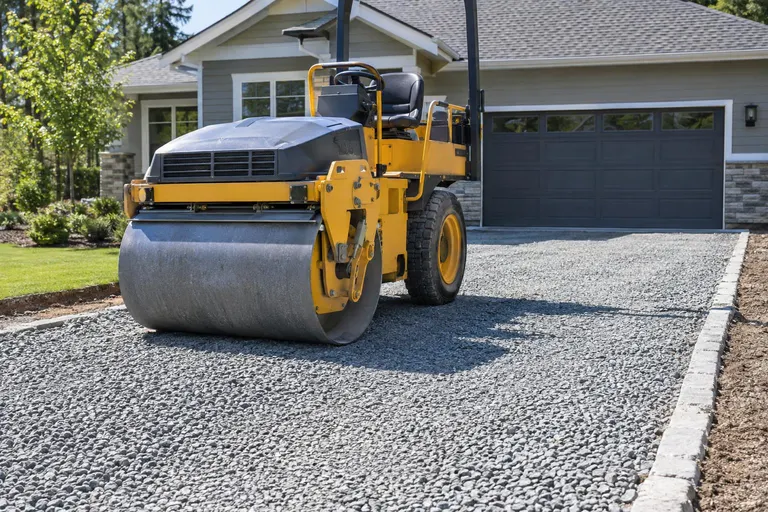
Stone base, compacted
Crushed stone goes down in lifts and each one is compacted to density. The base spreads the load and is what makes pavement last.
Compacted in lifts - 04
Hot-mix asphalt laid
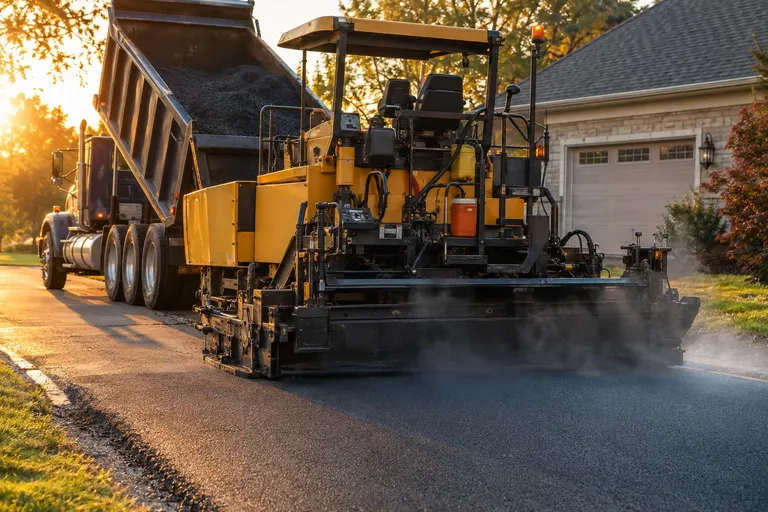
Hot mix, around 300 degrees, is fed into the paver and laid in an even mat at the planned thickness, with tight seams and clean edges.
Even, uniform mat - 05
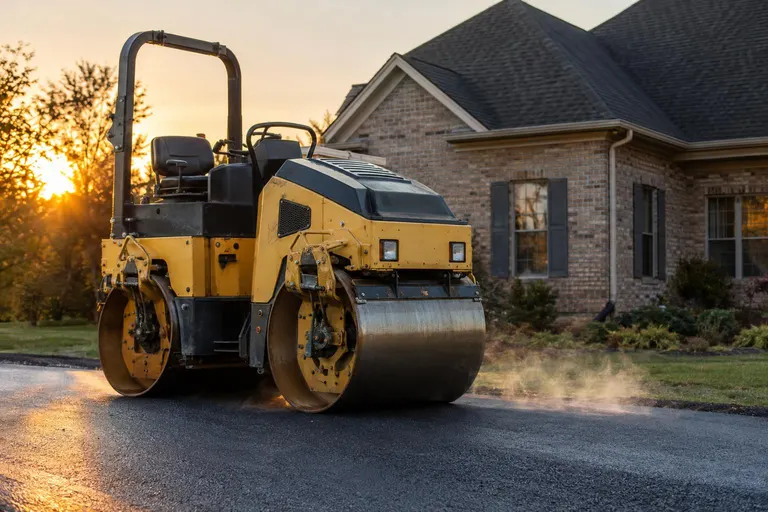
Rolled while hot
The roller follows closely, compacting the mat before it cools. Compaction gives asphalt its density, smoothness and long life.
Dense and smooth - 06
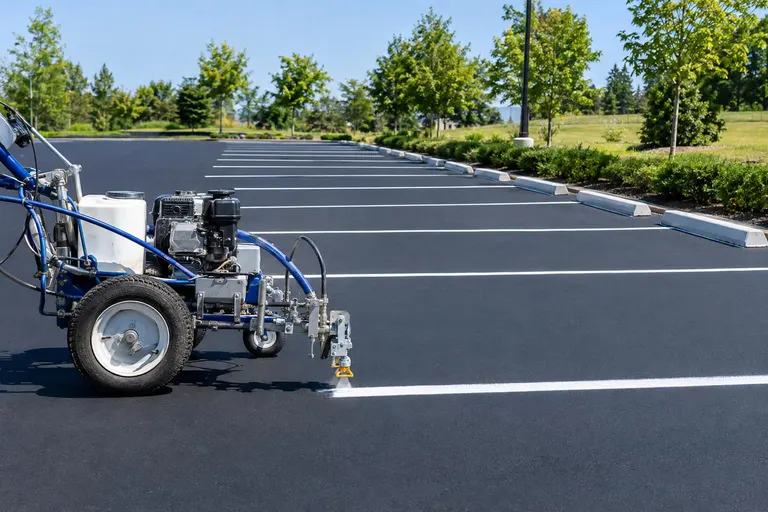
Edges, striping and cure
Edges are trimmed, lines and markings are painted, the site is cleaned and we explain how long to stay off the surface. A walkthrough closes the job.
Cones out, lines in
Your project checklist.
- Tell us what you want: a new drive, a lot refresh, a repair
- Mark buried utilities, low-voltage lines and anything we should avoid
- Clear vehicles from the work area for the days we need it
- Share HOA or permit requirements if you have them
- Know that rain and temperature can shift the schedule
Six promises we keep.
Built from the base up
Stone base, grade and drainage are done right before a single ton of asphalt arrives.
Rolled while it is hot
Hot mix is compacted promptly for a dense, smooth surface with tight seams.
Itemized written bids
Thickness, base depth, area and exclusions in writing, so bids compare fairly.
Drainage planned
Water is the enemy of pavement, so grades, inlets and culverts get real attention.
Clean sites
We protect lawns, sweep up and leave the site tidy, with a walkthrough at the end.
We answer the phone
Call or text 615-209-7643 and a real person responds, before and after the job.
Process questions
How thick should an asphalt driveway be?
Residential driveways are commonly paved with about two to three inches of compacted asphalt over four to eight inches of compacted stone. Parking lots often use three to four inches, and truck areas use more. A good base and drainage matter more than a thicker top layer.
How long before I can drive on new asphalt?
You can usually walk on fresh asphalt within hours and drive on it after about 24 to 72 hours, depending on the weather. Keep heavy vehicles off for several days and avoid sharp turning while the surface is warm.
Can you pave my parking lot without closing my business?
Usually yes. We phase the work, close only part of the lot at a time, schedule around your hours where possible and give you a written schedule so customers always have a way in.
How do I get a quote?
Fill in the form on any page or call or text 615-209-7643. We schedule a free site visit, measure, check drainage and the existing pavement and send a written, itemized estimate.
Start with the easy part.
Book a free site visit. We measure, check the base and talk through your goals.