
How asphalt paving really works.
Six layers, one job. Tap through the anatomy of a pavement, press Compact it and see what each layer does, then watch a whole job go down in the simulator.
Six layers, one job.
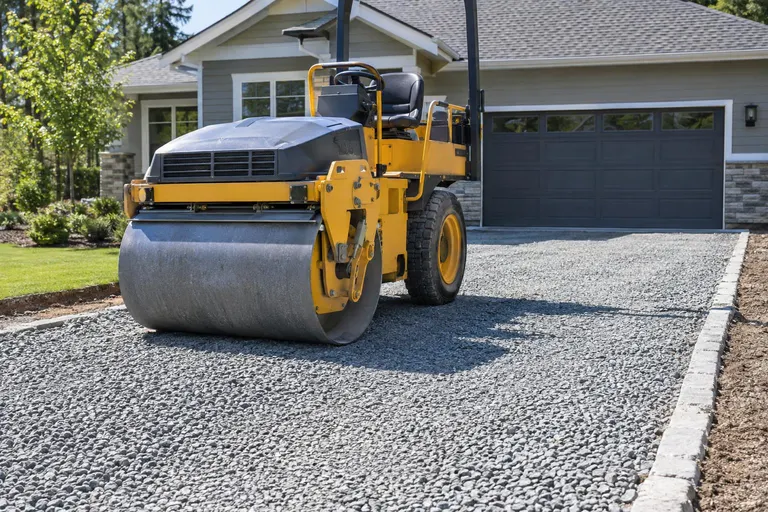
Tap each numbered layer, then press Compact it to watch the roller work.
The wearing layer: dense, fine asphalt about 1 to 2 inches thick that resists tires, sun and water. It is rolled while hot for a tight, smooth surface.
A coarser asphalt layer beneath the surface on thicker pavements. It adds strength so the surface layer can stay thin.
A thin sticky film sprayed between layers or before an overlay so the new asphalt bonds instead of sliding.
Compacted crushed stone, often 4 to 12 inches, that spreads the load and lets water drain. It is the layer that decides how long pavement lasts.
A separation fabric over soft or clay soil that keeps the stone from sinking into the ground and adds stability.
The native soil under everything, graded and proof-rolled so weak spots are found and fixed before stone goes down.
Shoulders, curbs, swales and culverts that keep water moving away from the pavement edge, where most breakup begins.
A job, start to finish.
Pick a driveway, a lot or a private road and watch the paver and roller.
- Area
- Asphalt
- Truck loads
- Crew time
- Planning price
Pick a job, press Start paving and watch the paver lay hot mix while the roller follows.
The details behind a smooth surface.
Compaction is everything
A dense mat resists water and wear.
Base before black
Stone and drainage decide the life.
Tack coats bond layers
New asphalt must stick to the old.
Seams are weak spots
Tight, rolled seams keep water out.
Cure takes time
Stay off the new surface until it hardens.
Get your number
A free visit turns all of this into one written price. Ask for my estimate
How it works: common questions
How thick should an asphalt driveway be?
Residential driveways are commonly paved with about two to three inches of compacted asphalt over four to eight inches of compacted stone. Parking lots often use three to four inches, and truck areas use more. A good base and drainage matter more than a thicker top layer.
How long before I can drive on new asphalt?
You can usually walk on fresh asphalt within hours and drive on it after about 24 to 72 hours, depending on the weather. Keep heavy vehicles off for several days and avoid sharp turning while the surface is warm.
How long does an asphalt driveway last?
Many asphalt driveways last 15 to 25 years or more with a good base, proper drainage and routine crack sealing and sealcoating. Water and a weak base shorten life far more than age alone.
See how it would work on your property.
A free site visit includes measuring, a base and drainage check and a written price.